The CMS Model WHO Society event in Lisbon, a simulation of the World Health Assembly, was centered on Reframing the Global Response to Substance Use.
Researching this opportunity while teaching myself SQL got me wondering how I could tie the two together. For my first SQL project, I cleaned and queried the CDC’s 2021 Behavioral Risk Factor Surveillance System, consisting of 438,693 survey responses across 303 columns. I recoded survey-specific placeholder values, converted alcohol frequency responses from a mixed weekly/monthly format into comparable units, and determined which non-responses reflected genuine missing data versus optional survey modules.

Exploring this data as a SQL newbie proved fruitful for turning these health challenges over in my mind.
Among respondents asked about adverse childhood experiences, recalled exposure to alcohol use disorder in the home (23.5%) was more than twice the rate of recalled illegal drug use (9.3%), with mental illness sitting in between at 17.9%. Alcohol was clearly the most visible. From my vantage point, that gap likely reflects stigma and recognition more than true prevalence, and has real implications for which harms get addressed and which stay hidden. It’s worth noting at the same time that this module was optional across states, so these figures represent participating respondents rather than the full US population.
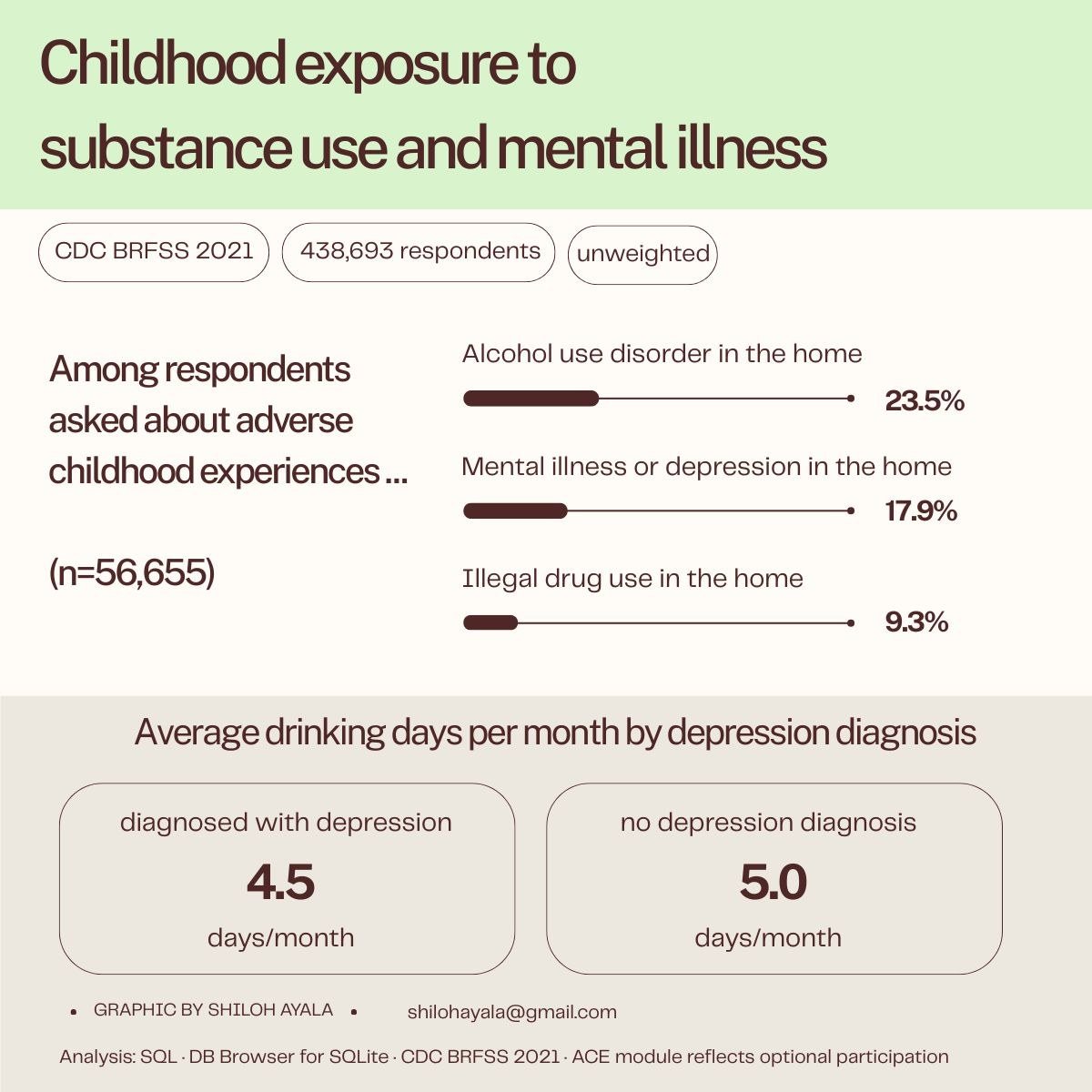
The next observation surprised me. Adults with a diagnosed depressive disorder averaged 4.5 drinking days per month, compared to 5.0 for those without one. These averages include non-drinkers, counted as zero drinking days. The difference is modest enough to warrant further statistical testing, but the direction was counterintuitive regardless.
There are two explanations I think could reflect sides of the same coin. Diagnosis ties people into the care system, which could potentially reduce harmful drinking. Or those without a diagnosis may be managing undiagnosed symptoms with alcohol, a well-documented pattern in the literature. Either way, what gets identified gets addressed, which matters enormously in the massive number of cases where substance abuse and mental health challenges overlap.
A limitation worth naming is that this survey doesn’t differentiate between types of substance use, which shapes what questions I can and can’t ask of the data. This mirrors a broader issue in how drug use gets discussed as a monolith, impacting how patient-centered we can be in our design of truly effective treatment pathways.
To tie things up, I cross-checked my findings against the CDC’s published codebook figures to verify nothing got distorted in the cleaning process. All figures here are unweighted sample proportions, so applying the BRFSS survey weights is a natural next step. And a note that this data is from 2021, a COVID-era snapshot, so mental health indicators were likely elevated relative to pre-pandemic norms.